
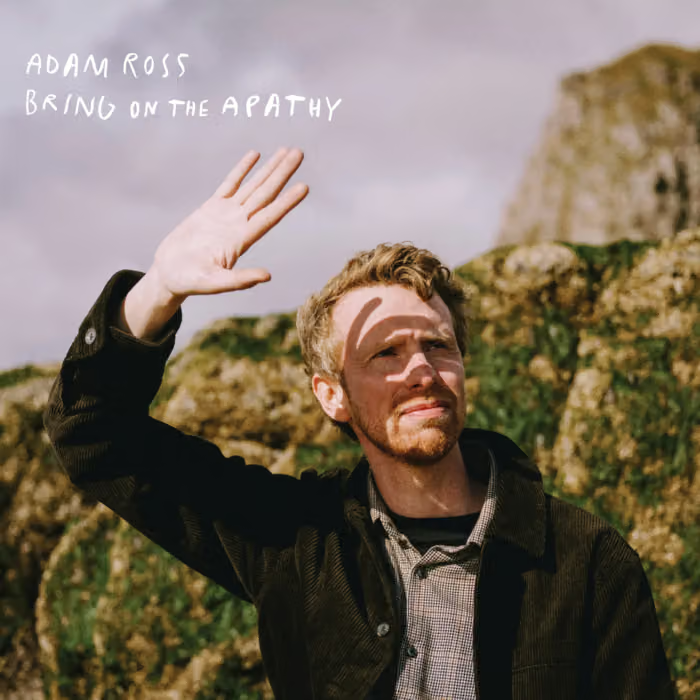
Go further, seize the apathy, as Ross bares his soul with melodious maudlin charm and wit on Bring On The Apathy.
FILE UNDER A
Lot’s of Rosses in Scotland, both as first names and surnames, understandably causing occasional confusion. Well. this one deserves a wee glimpse and his own spot in the sun, too. Helpfully filed under A, should that be your way of cataloguing, however much an abomination that may actually be. We’ve met him before, back in ’22, calling his own name debut “delightfully stripped back leap forward“. Three years on allows more of a group approach, a rhythm section now part of the deal, although the lead fiddle of Pedro Cameron, aka Man Of The Minch, remains a constant in the continuum.
AN ATTRACTIVE AMBLE
Berkeley Street opens proceedings and is an attractive amble through the singer’s memory bank, of time spent in Glasgow’s street of that name. And, for all the jolly tune, buoyed along by the efficient drums of Owen Curtis Williams, and Cameron’s warm fiddle, watch out for the brambles, as Ross isn’t always necessarily a happy chappy: “I used to have opinions, they were getting in the way“. Nonetheless, a piano tinkles and harmonies coo and, superficially, all seems well. A bit like finding a polaroid at the bottom of an old trunk, the past takes no prisoners. A good start.
I Never Though You Couldn’t Not is a typical example of Ross’s twisty way of words, again launched by William’s precise sticksmanship. Organ, from Pete McDonald, simmers in the background of the piano Ross’s old Randolph’s Leap bandmate is also providing, with Cameron Maxwell adding some nimble bass. Ross here winds his tremulous tenor around a narrative full of self-deprecatory resignation. The harmonies that feature throughout this album get a strong showing here, from Chris Duncan, aka C.Duncan, Amanda Nizich, Gillian Fleetwood and Cameron. It is clear already that this is, regardless the fiddle, anything but folk, being much more redolent of the intelligent and sophisticated pop that Scotland has such talent for.
ENERGETIC SELF-IMMOLATION
Unrequited continues to mine the same seam and theme that seems predominant to his muse, one maybe more defined by regret than replenishment: “The strangest love I ever knew was the one that was unrequited”. And he a skinny Scottish ginger, if he’ll forgive me, who knew? Again, the piano/organ interface is exemplary. Crisis saunters in at much the same meter, but, by virtue the nifty arrangement, manages to be so much more than just more of the same, again fuelled by Ross’s energetic self-immolatory wordplay. Not always a lyrics man, I can’t resist: “Is this a side-life crisis, or is this art?” By now I am getting a heady whiff of a more tuneful Andy White and a slightly less polished Stephen Duffy. And that’s good.
How Do You Know is then a slower song, a desperate waltz that questions the meaning of, what else, life and happiness. McDonald and Maxwell bolt on the mood of a late-night cellar bar, after hours, maybe more people on stage than in the audience. The title track next, for all its apparent jauntiness, plunges still deeper into coruscatory self-interrogation, albeit with a catchy singalong chorus, replete with honk-tonk barrelhouse piano. You OK, hun, might be a reasonable question to ask at this stage, but Ross is adamant that songwriting is therapy, citing it good to “explore these feelings and get them out there“. Plus, he says, “I don’t necessarily mean everything I sing“. Which is reassuring.

UNCHARACTERISTIC BREEZY FEELGOOD
Lost In The Daylight actually is an upbeat anthemic romp, or purports to be. Cameron’s fiddle dances deftly with McDonald’s organ. It would make a great single to have in the middle of an 1980’s Top of the Pops, amidst all the otherwise dour posturing then so often a feature of the chart. Very Bluebells-y, in fact. But Horizon follows to restore Ross’s resting face of maudlin wist. I often think dirges can make the best bangers, and this fits that bill to a B, with a slight country mood seeping in from the sides. That said, To The Kites is almost positively joyous, a cheery candyfloss construct. OK, the lyrical thrust might belie that, but I’m sticking to my belief in the song being breezy feelgood. With extra kudos for a rhyme that pairs Hieronymous with anonymous.
Time, which ends this selection of ten songs, features Fleetwood’s instrumental addition of harp. Even by the standards thus far, this is a sombre piece, questioning, once more, the purpose of “all this time that we call life“. Ross has felt his mid 30’s filling him with more and more existential dread about the answer, should there be one. Ooof, hang on in there buddy, but, to be fair, I believe his earlier rationalisation around exposing his underbelly for scrutiny. We can’t all be Altered Images and happy happy happy all the time, can we?
LET IT LINGER
Give this album time. The melodies are all pretty instant, but, as repeated plays bring out the nuances and wry humour of Ross’s writing, so it embeds deeper. The sound is luxurious, with no surprise it was recorded direct to tape, on analogue equipment, which warms any chill that might otherwise be apparent. The musicians make a deep and comfy bed for Ross to recline in, and Duncan, whose job was to arrange as well as be part of the harmonies, does a sterling job.
Adam Ross: Website
At The Barrier: Facebook / X / Instagram
Categories: Uncategorised
