
In which Ross Wilson effortlessly casts off the shackles of his most successful record by making one both nothing like it and yet so much better still.
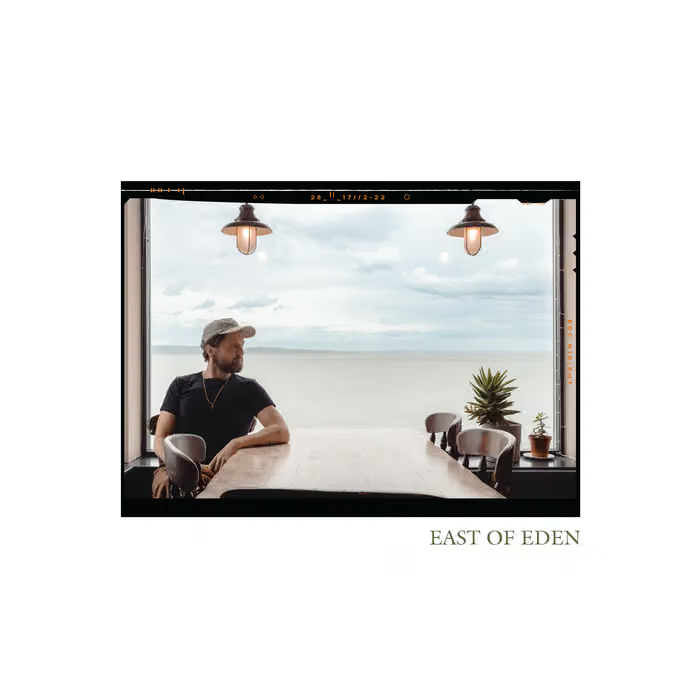
POST HOOLEY CONCENTRATE
After the full blown hooley of Bright Circumstance, and the accompanying 9 piece Caley Soul Band shows that went with it, where now for Ross Wilson? Eschewing the bigger is better format, so no tux and big band here, and no orchestral variations, he, for he, essentially, is BRC, has gone full circle. Or even fuller, as his albums have always embraced a cavalcade of performers to fill out the sound. This is a much more select affair, dialled right down on at least that aspect. And, in the same way as anyone who has witnessed his more recent solo and duo shows, less really can be so much more, with a writer of this calibre and passion.
CONFIDENT & POLISHED
As Good As It Gets starts off the show, a richly observed country-folk fusion, Wilson’s Caledonian burr sitting comfortably alongside the twangy accompaniment of longterm right hand man, (is he still Wild) Lyle Watt. “I now no longer am a young man“, sings Wilson, over, initially, his own strummed acoustic. Smooth duet vocals wash in from Niamh Corkey. “And every day when I begin, again, I take just what I want, and leave the rest“.
Choral harmonies then kickstart the entry of Watt, and it is a tremendous start, confident and polished. There might just be a distant waft of pedal steel to further gild this lily, courtesy Conor Smith. If the first track of Bright Circumstance made you go wow with astonishment, now you can say the same, if with less surprise, in a lower register and with the gravitas of certainty. It is that good.
Broken Hallelujahs has all the feel of a frantic subway busk, a story song that strays into a bluegrass hoedown, coupled with a medicine show hollered vocal. Frantic fiddle scythes and saws, from Mhairi Marwick, with Watt giving it the full Albert Lee on acoustic. I’m not sure who is tackling the mandolin, but they deserve the knowing. If Robert Earl Keen was a tenor from the central belt, he would sing a song like this. It ends with a barely sustained giggle, totally befitting the almost (ascloseasthis) derailment, just ahead the buffers. One More Day is back into the gentle roustabout sway of the opener, again with Corkey adding glorious cooing bvs, and another deliciously clangy electric solo from Watt, more mandolin and the first appearance of Paul Harrison’s tinkling piano keys.
AN INSTANT HIGHLIGHT; EXEMPLARY
It is Harrison’s piano which frames the delicate confessional of Annalea. Except, for once, rather than Wilson delving back into his own backstory, is the narrative of a fictional 3rd party. Unless we hear later different, it being such a convincing rend of the heart. An instant highlight, once more the Marwick/Watt axis is exemplary. Could it be Wilson’s most beautiful song yet, from an already pretty crowded field.
Your Love, like several of the songs here, has been part of his set for a while, and strays little from the version I seem to recall, am I right, he debuted, alone, at Brum’s Kitchen Garden Café, in July of last year. True, there are here choral bvs and muted second guitar, but, as a song both of love and devotion, it is both touching, as well as being true to the this is what you get persona Wilson always displays in concert.
Wherever You Go has a sort of lilting quality to it, that style of early Eagles song, earmarking that band as then, if but for a while, worth registering, There are drums and bass now, each perhaps for the first time, from regular compadres, Stuart Brown and album producer, Gus Stirrat. Classic Americana, steel and piano also haunt the shared Corkey/Wilson vocal partnership. Is it better than Annalea? It’s a very close call. As some cabaret piano ripples beckon in Here Comes The Shotgun, before the rhythm slips the gears into a high octave jazz-blues-country jump jive. Wilson near spits out the words, like a less raucous Mike Scott, the whole song itself not Waterboy unadjacent, especially as Marwick swoops in with some fiddle. And don’t get me started on Watt’s wild guitar. (So, it’s a yes.)
BUFFALO SPRINGBANK?
The Bad Guys keeps the flavours fluid, if still within a broadly Country and West-End focus, with Smith now switching to dobro. Referencing John Wayne and Captain Kirk, it ends in a deliberately cheesy fashion, as if to counter the difficulty of offering sage and sober advice to a friend, when they might find the truth too sombre. Texas Medicine is a complete contrast, a six minute plus epic, redolent in construction, if not style or voice, to early Neil Young.
Dipping between eloquent instrumental textures and a declamatory vocal, it is quite something, immaculately alchemised together by Stirrat. As it builds, so the musical clouds gather and darken, a sense of an old testament judgement day flickering through the questions raised. A middle section is held together by mandolin and treated fiddle, bass guitar adding long shadows, before the composition suddenly saddles up and gallops towards the sunset. Or maybe just the credits. Either way, it bears an immediate repeat, so as to make sure you really heard what you heard.
A real follow that song, such songs are always near impossible to follow. But Wilson is a past master at this game. closing the album with Emily, a reflective and reflecting song that gradually builds, if in a totally different way. Here the build is entirely complementary, and as natural as those that build around a rolling snowball. Each of the participants thus far each get space to add their two pennorth, without ever taking away the attention from the the man whose album this is, his voice at peak precision as it ends, on a silent sixpence.
HEWN FROM A DEEPER CORE
This record, I am not ashamed to say, totally blindsided me; I was expecting more of the bluff and bluster that Bright Circumstance seemed to be pointing, much more party time than this. And I relish that, as Wilson has allowed himself to step back from pleasing just the crowd. These songs feel hewn from a deeper core of his soul and suggest that he is pleasing also himself and those to whom he turns for guidance. Much as the lyrics of As Good As It Gets are stating in plain sight. Less that difficult album number 7, more his best yet. ( And you know, it’s the first that needs no mention of the two usual boilerplated names deemed so inspirational to underwrite his art. I’m not going to mention them, there’s no longer any need.)
Here’s the first track, As Good As It Gets. Which it isn’t:
Blue Rose Code: Website
Categories: Uncategorised
